Source Microneedle Electroporation Wireless Dermapen for Salon, Home, Facial Neck
Find and compare 30 Microneedle Electroporation Wireless Dermapen options featuring wired or wireless power, multiple needle sizes, and customization. These devices support skin rejuvenation, wrinkle removal, and moisturizing for salon and home applications.
Key considerations
Products List


Electrical Digital Microneedle Therapy Derma Roller Pen Wireless Dermapen
$40.99 - $69.99
MOQ: 10 Pieces


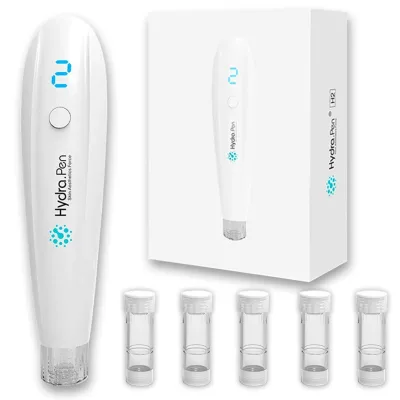


Hot Sale Electric Wireless Dermapen Microneedling Derma Pen with LCD Screen
$21.00 - $32.00
MOQ: 1 Pieces


Comprehensive Sourcing Guide
Strategic Sourcing Guide for Wireless Derma Pen and Microneedle Electroporation Systems
Understanding the Core Technology and Product Variants
The search term "Microneedle Electroporation Wireless Dermapen" encompasses a diverse category of aesthetic devices that merge mechanical needling with advanced delivery systems. In the current B2B market, these devices are primarily categorized into two distinct functional types: the Derma Rolling System and the No-Needle Mesotherapy Device. While the core keyword suggests electroporation, the available product data indicates a strong presence of devices operating on the principle of "Needle" or "Derma Rolling" theory. Buyers must distinguish between these technologies during the initial research phase. The Derma Rolling System, often identified by models such as DR-A1 or DR-A2, utilizes a rotating head with multiple needles to create micro-channels in the skin. Conversely, the No-Needle Mesotherapy Device, sometimes labeled under models like m8 or specific derma pen variants, operates without direct needle penetration in the traditional sense, relying on alternative delivery mechanisms.
The market offers a wide spectrum of specifications regarding needle configuration. Observed data reveals that available needle counts range significantly, including configurations of 1, 3, 5, 7, 9, 12, 36, and 42 needles, alongside Nano Needle options. The needle size itself is a critical variable, with observed ranges spanning from 0.25mm up to 3.0mm, though some specific models like the Dr Pen M5 or m8 are noted with lengths from 0.25mm to 2.0mm. This variation directly impacts the device's application, with shorter needles often suited for superficial treatments and longer needles targeting deeper dermal layers. Furthermore, the power source is a defining feature of modern sourcing; the category is characterized by devices that are either Wired or Wireless, with the "Wireless" aspect being a primary driver for portability and salon usability. The physical dimensions of these units also vary, with standard specifications observed at 19.718.55.7cm for certain models and 17136cm for others, indicating that buyers must verify the exact footprint required for their specific inventory or display needs.
Technical Specifications and Performance Parameters
When evaluating the technical specifications of wireless derma pens, buyers must scrutinize the speed levels and material grades, as these factors dictate the device's versatility and longevity. The product data indicates that many units in this category feature a 5 Speed Level setting, allowing practitioners to adjust the oscillation or rotation speed to match the sensitivity of the treatment area. This adjustability is essential for applications ranging from facial rejuvenation to more intensive body treatments. The material grade of the needles is another critical technical parameter. Supply chains for these devices often cite grades such as A1, A6, A7, M5, M7, and Mym. These designations likely refer to the steel composition and plating quality, which influence the sharpness of the needle and the risk of skin irritation.
The functional capabilities of these devices extend beyond simple needling. The observed attributes list functions such as Skin Rejuvenation, Wrinkle Removal, and Pigment Removal. Some models are explicitly marketed for Moisturizer delivery, suggesting a compatibility with topical serums. The theory of operation is consistently linked to the "Needle" or "Derma Rolling" mechanism, which physically stimulates collagen production. However, a subset of products in the data is associated with "Dermal Filler Injection" usage modes and "Gel" forms, specifically mentioning "Dermal Filler Hyaluronic Acid." This suggests that some listings may bundle the device with consumables or describe a broader treatment protocol rather than the device alone. Buyers should be cautious to verify if the "electroporation" aspect mentioned in the core keyword is a standard feature or a specific high-end variant, as the provided data heavily emphasizes mechanical needling and injection theories.
The physical construction of the device also includes specific packing standards. Most units are supplied in a Carton Box or a standard Box, with some specific models adhering to a "1 PIECE" standard for single-unit packaging. The weight of the main body is noted as 150 (likely grams), which contributes to the ergonomic handling required for extended salon sessions. The application scope is broad, covering Salon, Home, Facial, and Neck areas, and the devices are generally designed for Unisex use on Adults. The absence of reported side effects in the provided data is an observation of the product listing rather than a guaranteed clinical outcome, and buyers must rely on their own due diligence regarding safety protocols.
Compliance, Certification, and Regulatory Verification
Navigating the regulatory landscape for aesthetic devices requires a rigorous approach to compliance and certification. While the supplied data includes a low-confidence background reference to "CE" certification, this should not be treated as a confirmed attribute for all listed products. In the B2B procurement of medical and aesthetic devices, the absence of explicit certification data in a product listing is a significant risk factor. Buyers must independently verify that the manufacturer holds valid certifications for the target markets, such as CE marking for Europe, FDA clearance for the United States, or other regional regulatory approvals. The data indicates the products originate from China, a major manufacturing hub for these devices, but origin does not equate to compliance.
The "Standard" attributes listed in the data, such as "19.718.55.7cm" or "17136cm," appear to refer to physical dimensions rather than regulatory standards. Similarly, references to "dr pen MYM" or specific model numbers like "OC232" serve as product identifiers rather than safety standards. Buyers should not assume that a product listing mentioning "No Side Effect" or "Natural Product Extraction" pharmaceutical technology implies regulatory approval. These are marketing claims that require validation against official regulatory databases. The procurement process must include a request for specific certification documents, such as the CE Certificate of Conformity or ISO 13485 certification for medical device quality management systems. Without these documents, importing these devices into regulated markets can lead to customs seizures, legal penalties, or liability issues if adverse events occur during use.
Cost Drivers and Pricing Structure Analysis
The pricing structure for wireless derma pens is influenced by several key variables, including the complexity of the mechanism, the quality of the needle grade, and the inclusion of accessories. The observed price range in the market for these products spans from 15 to 119 USD. This wide disparity suggests that the lower end of the spectrum likely represents basic models with fewer speed settings, lower-grade needles, or minimal accessories, while the higher end may include advanced features like electroporation capabilities, higher-grade steel needles, or comprehensive starter kits. The Minimum Order Quantity (MOQ) is another critical cost driver, with observed ranges from 1 to 100 units. Buyers seeking to minimize initial capital outlay can find suppliers with an MOQ of 1, which is ideal for testing the market or small-scale resellers. However, for bulk procurement to achieve economies of scale, buyers should target suppliers with higher MOQs, as unit costs typically decrease with volume.
The "Supply Type" listed as OEM/Obm/ODM indicates that many manufacturers are willing to customize the product, which can impact the final cost. Customization options, such as branding, packaging design, or specific needle configurations, often incur additional setup fees or higher per-unit costs. The "Delivery" lead time of 3-5 days observed in the data is exceptionally short and may apply only to stock items or specific regions; buyers should verify if this lead time is consistent for international shipping and custom orders. Additionally, the "Disposable" nature of certain components, such as needle cartridges, represents a recurring cost that must be factored into the total cost of ownership. While the device itself may have a one-time purchase price, the long-term profitability of a business selling these devices depends on the cost and availability of compatible consumables.
Typical Applications and Market Segmentation
The application scope for wireless derma pens is extensive, catering to both professional and consumer markets. The primary applications identified include Salon and Home use, with specific suitability for Facial and Neck treatments. The functional claims of Wrinkle Removal, Skin Rejuvenation, and Pigment Removal align with the growing demand for non-surgical aesthetic solutions. For professional salons, the portability of these devices is a significant advantage, allowing for mobile treatments or flexible station setups. The "5 Speed Level" feature enables practitioners to tailor treatments to different skin types and concerns, enhancing the value proposition for high-end clinics.
In the home-use segment, the "Wireless" capability and "Portable" design are paramount. Consumers prioritize ease of use and safety, making devices with clear speed controls and ergonomic designs more attractive. The data also mentions applications for "Injection Ares" such as the Forehead, Face, Eye, Nose, Lips, Breast, Buttocks, and Body. While the device itself is a delivery tool, the mention of these areas suggests a broader treatment protocol that may involve the use of fillers or serums. Buyers should note that the "Usage" is specified as "for External Use," which is a critical safety distinction. The "Gender" is listed as Unisex, and the "Suitable for" demographic is Adults, indicating that these devices are not intended for pediatric use. The "Efficacy" claims of Wrinkle Removal and Skin Beauty are common marketing themes, but buyers must ensure that the specific product they source has the technical capability to support these claims through its needle configuration and speed settings.
Supplier Evaluation and Quality Control Protocols
Evaluating suppliers for wireless derma pens requires a multi-faceted approach that goes beyond price and lead time. The "Supply Type" of OEM/ODM suggests that many suppliers are manufacturers capable of customization, which can be a double-edged sword. While it offers flexibility, it also requires strict quality control to ensure that customizations do not compromise the device's safety or performance. Buyers should prioritize suppliers who can provide detailed technical documentation, including the specific grade of the needles (e.g., A1, M5, Mym) and the power source specifications (Wired vs. Wireless). The "Standard Needles" attribute, noting "12 Needles for 2PCS," indicates that needle configuration is a variable that must be clearly defined in the purchase order to avoid confusion.
Quality control should focus on the consistency of the needle manufacturing and the durability of the device's motor. The "Needles Type" list includes 9, 12, 24, 36, 42, 18 Needles, and Nano, and buyers must verify that the supplier can consistently produce these variations without defects. The "Product Name" and "Model" (e.g., DR-A1, DR-A2, Dr Pen M5, dr pen A9) should be cross-referenced with the physical product to ensure authenticity. Given the "Low-confidence" status of the CE certification in the data, buyers should conduct pre-shipment inspections to verify the physical build quality and the presence of any required safety labels. The "Process" of "Natural Product Extraction" mentioned in the data likely refers to the consumables rather than the device, but it highlights the need for a holistic view of the product ecosystem. Buyers should also assess the supplier's ability to provide after-sales support, including warranty terms and the availability of replacement parts.
Long-Term Procurement and Strategic Considerations
Long-term procurement of wireless derma pens involves strategic planning for inventory management, market trends, and regulatory evolution. The "Delivery" lead time of 3-5 days is a favorable attribute for maintaining lean inventory, but buyers must consider the potential for supply chain disruptions, especially given the "China" origin of the products. Diversifying the supplier base can mitigate risks associated with single-source dependency. The "Customization" availability offers a pathway for brand differentiation, allowing buyers to create unique product lines that stand out in a crowded market. However, customization should be approached with caution to ensure that the added complexity does not lead to quality issues or increased costs.
The "Feature" set of Moisturizer, Pigment Removal, and Skin indicates that the market is evolving towards multi-functional devices. Buyers should stay informed about emerging technologies, such as true electroporation capabilities, which may command a premium price. The "Disposable" nature of certain components suggests a recurring revenue stream for businesses that sell both the device and the consumables. Long-term success will depend on the ability to maintain a reliable supply of high-quality needles and serums that are compatible with the devices. Finally, buyers must remain vigilant regarding regulatory changes. As the aesthetic device market matures, regulatory bodies may impose stricter requirements on safety and efficacy claims. Proactive engagement with suppliers regarding compliance updates and the ability to adapt to new standards will be essential for sustaining a successful procurement strategy in this dynamic sector.
FAQs
What needle sizes are available for these devices?
Available needle sizes range from 0.25mm to 3.0mm across the product line. Specific models like the Dr Pen M5 offer lengths from 0.25mm to 2.0mm, allowing users to select configurations based on treatment depth requirements.
Can these devices be used for both salon and home applications?
Yes, these devices are designed for both salon and home applications. They feature portable, wireless capabilities that support versatile use in professional clinics as well as personal skincare routines for facial and neck treatments.
Which power options are supported by the derma pen models?
The devices support both wired and wireless power options. This flexibility ensures that users can operate the unit continuously in a salon setting or enjoy the portability of wireless operation for home use.
How many speed levels do these derma rolling systems offer?
Most units in this category feature five distinct speed levels. This adjustable speed setting allows practitioners to customize the treatment intensity according to the sensitivity of the skin area being treated.
What customization options are available for bulk orders?
Customization is available for bulk orders through OEM, OBM, and ODM supply types. Buyers can request specific branding, packaging, or needle configurations to meet their unique market requirements and business models.
What is the typical delivery lead time for these products?
The observed delivery lead time is typically 3 to 5 days for available stock items. Buyers should verify this timeline with specific suppliers as international shipping or custom orders may require additional processing time.